
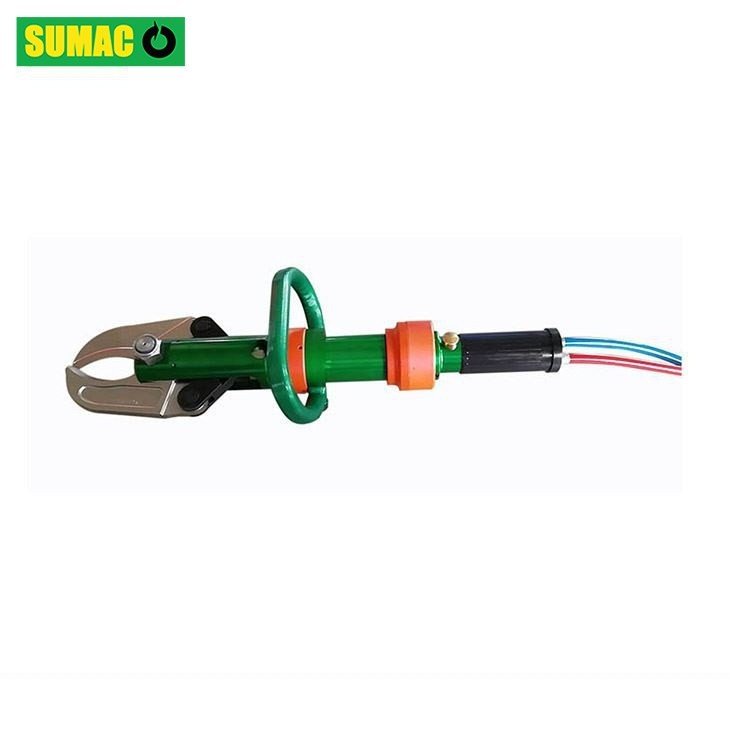
Handheld Hydraulic Scissors

Sumac Auto Recycling
A handheld hydraulic scissors is a cutting tool that operates with hydraulic power and is designed to be held and operated by hand. This innovative tool utilizes hydraulic pressure to facilitate efficient and precise cutting of various materials.

Preferred Vendors Direct Available
- Description
- Reviews (0)
- Questions & Answers
- Vendor Info
- Location
- More Products
- Warranty Policy
- Product Enquiry
SUMAC Auto Recycling Equipment Co.,Ltd is one of the most professional manufacturers and suppliers of handheld hydraulic scissors in China. Please feel free to buy high quality handheld hydraulic scissors at competitive price from our factory.
What is Handheld Hydraulic Scissors?
A handheld hydraulic scissors is a cutting tool that operates with hydraulic power and is designed to be held and operated by hand. This innovative tool utilizes hydraulic pressure to facilitate efficient and precise cutting of various materials. The handheld design allows for increased mobility and flexibility, making it suitable for a wide range of applications such as metalworking, construction, and other industries where accurate and controlled cutting is essential. The hydraulic mechanism enhances cutting force, enabling the scissors to easily handle tougher materials. This type of tool is valued for its ease of use, portability, and versatility in addressing diverse cutting needs across different professional settings.
Advantages of Handheld Hydraulic Scissors
Precision And Control
Handheld hydraulic scissors provide unparalleled precision and control during cutting operations. The hydraulic mechanism ensures a consistent and controlled force, allowing operators to make accurate cuts on a wide range of materials, from soft fabrics to tough metals.
Versatility
One of the key advantages of these scissors lies in their versatility. They are well-suited for cutting different materials, including metal, plastic, rubber, and more. The handheld design enhances maneuverability, enabling operators to access tight spaces and perform intricate cuts with ease.
Ease Of Use And Portability
Handheld hydraulic scissors are designed with user convenience in mind. Their ergonomic design and lightweight construction make them easy to handle for extended periods without causing operator fatigue.
Increased Cutting Power
The hydraulic power system integrated into these scissors significantly boosts cutting force compared to traditional manual scissors. This increased cutting power enables the efficient handling of thicker and more robust materials, enhancing overall productivity in industrial settings.
Vehicle Metal Pipe Hydraulic Cutter
Car Metal Pipe Hydraulic Cutter
Waste Vehicle Metal Pipe Hydraulic Cutter
Waste Car Metal Pipe Hydraulic Cutter
ELV Portable Hydraulic Cutter
ELV Recycling Portable Hydraulic Cutter
Hydraulic Tyre Recycle Cutting Machine
Portable Hydraulic Metal Shear
ELV Recycler Vehicle Hydraulic Cutter
Why Choose Us?
High Quality
Our products are manufactured or executed to very high standards, using the finest materials and manufacturing processes.
24h Online Service
We try and respond to all concerns within 24 hours and our teams are always at your disposal in case of any emergencies.
Rich Experience
Dedicated to strict quality control and attentive customer service, our experienced staff is always available to discuss your requirements and ensure complete customer satisfaction.
Quality Control
We have professional personnel to monitor the production process, inspect the products and ensure that the final product meets the required quality level standards, guidelines and specifications.
Components of Handheld Hydraulic Scissors
Hydraulic Pump
The hydraulic pump is a crucial component responsible for generating hydraulic pressure. It may be manually operated, electrically powered, or driven by other means, depending on the design of the scissors. The pump pressurizes hydraulic fluid, which is then transmitted to the cutting mechanism.
Hydraulic Cylinder
The hydraulic cylinder is a device that converts hydraulic pressure into mechanical force. It is usually integrated into the scissors’ structure and plays a vital role in driving the cutting blades. The movement of the hydraulic cylinder determines the opening and closing of the blades during cutting operations.
Cutting Blades
The cutting blades are the actual cutting elements of the scissors. They are typically made of durable materials such as hardened steel to ensure longevity and sharpness. The design of the blades may vary depending on the intended application, with options for different cutting angles or serrated edges to enhance performance on specific materials.
Trigger Or Control Mechanism
Handheld hydraulic scissors feature a trigger or control mechanism that allows the operator to initiate and control the cutting process. This component is often located on the handle or grip of the scissors, providing a user-friendly interface for activating the hydraulic system and manipulating the cutting blades.
Safety Features
Many handheld hydraulic scissors are equipped with safety features to protect the operator and prevent accidents. This may include safety locks, guards, or other mechanisms to secure the blades when not in use and to prevent unintentional activation.
Handle/grip
The handle or grip of the scissors is the part held by the operator during use. It is designed for comfort and ease of handling, often ergonomically shaped to reduce fatigue during prolonged use. The handle may also house the control mechanism, allowing the operator to conveniently manage the cutting process.
Reservoir And Hydraulic Lines
The hydraulic system includes a reservoir to store hydraulic fluid and hydraulic lines or hoses to transmit the fluid between the pump, cylinder, and other components. These components ensure a continuous and controlled flow of hydraulic pressure throughout the system.
In What Industries are Handheld Hydraulic Scissors Commonly Utilized
Construction
Hydraulic scissors can be useful for cutting materials like metal, plastic, or rubber on construction sites.
Metalworking
Industries involved in metal fabrication, welding, or maintenance may use handheld hydraulic scissors for cutting metal sheets, pipes, or other materials.
Emergency Services
Hydraulic cutting tools can be essential for emergency response teams, such as firefighters or rescue teams, to quickly cut through materials in rescue operations.
Automotive
In auto repair or dismantling applications, hydraulic scissors may be used for cutting through metal components or other materials.
Manufacturing
Various manufacturing processes may benefit from the precision and power of handheld hydraulic scissors, especially in tasks that involve cutting materials with high hardness or thickness.
Maintenance And Repair
Industries involved in equipment maintenance, repair, or dismantling may use handheld hydraulic scissors for cutting through various materials.
What Materials are the Cutting Blades of Handheld Hydraulic Scissors Typically Made From
Tool Steel
Tool steel is a popular choice for cutting blades in many industrial tools, including hydraulic scissors. It is known for its hardness, durability, and ability to retain a sharp edge.
High-speed Steel
Hss is another type of steel that is used for cutting tools. It has high hardness, wear resistance, and can maintain its cutting edge at elevated temperatures.
Tungsten Carbide
In some cases, tungsten carbide inserts may be used in the cutting blades. Tungsten carbide is a very hard and wear-resistant material, suitable for cutting through tough materials.
Alloy Steels
Various alloy steels with specific properties, such as high tensile strength and toughness, may be employed in the construction of cutting blades for handheld hydraulic scissors.
Cobalt Alloys
Cobalt alloys are known for their hardness and wear resistance. They can be used in applications where the cutting blades are subjected to high levels of stress and abrasion.
The choice of material depends on factors such as the type of material being cut, the required cutting precision, and the expected level of wear and tear during use.
How is the Hydraulic Pressure Generated in Handheld Hydraulic Scissors
Hydraulic Pump
The hydraulic pump is a crucial component that generates hydraulic pressure. There are different types of hydraulic pumps, but a common type used in handheld tools is a hand-operated pump. This pump is often manually operated by the user, providing a source of mechanical energy.
Pump Operation
When the user operates the pump, it creates mechanical force that is then transferred to the hydraulic fluid (usually oil) within the hydraulic system.
Hydraulic Fluid
Hydraulic fluid is used to transmit the pressure generated by the pump. This fluid is incompressible and efficiently transfers force.
Hydraulic System
The hydraulic system consists of a network of hoses, pipes, and valves that carry the hydraulic fluid from the pump to the hydraulic cylinder.
Hydraulic Cylinder
The hydraulic cylinder is a key component where the hydraulic pressure is utilized to perform work. In the case of handheld hydraulic scissors, the pressure is likely applied to a piston within the cylinder, which in turn activates the cutting mechanism.
Cutting Mechanism
The cutting blades of the scissors are connected to the hydraulic cylinder. When hydraulic pressure is applied to the cylinder, it causes the piston to move, and this movement is translated into the cutting action of the blades.
Release Valve
Handheld hydraulic tools often have a release valve that allows the user to control the pressure and release it when necessary. This is important for safety and precision during operation.
What Safety Features are Commonly Found in Handheld Hydraulic Scissors
01/
Pressure Relief Valve
Handheld hydraulic scissors often include a pressure relief valve, which is designed to release excess hydraulic pressure from the system. This prevents overloading and helps maintain a safe operating pressure.
02/
Safety Locks
Handheld hydraulic scissors may have safety locks or mechanisms to secure the cutting blades when not in use. This prevents unintended activation and protects users from accidental contact with the sharp blades.
03/
Two-hand Operation
Some models may require a two-hand operation, ensuring that the user has both hands on the tool during operation. This can help prevent accidental activation and enhances control.
04/
Ergonomic Design
Safety is also enhanced through the ergonomic design of the tool. Comfortable grips and controls contribute to better handling and reduce the risk of user fatigue or loss of control.
05/
Trigger Locks
Handheld hydraulic tools often feature trigger locks or similar mechanisms to prevent unintentional triggering of the cutting action. Users may need to consciously unlock the trigger before operating the tool.
06/
Durable Housing
The outer housing of the tool is typically designed to be durable and provide protection to internal components. This helps prevent injuries and damage in case of accidental drops or impacts.
07/
User Training
Manufacturers may provide guidelines and user training materials to educate users on proper operation, maintenance, and safety precautions. Understanding the tool’s capabilities and limitations is essential for safe use.
08/
Visible Warning Labels
Clear and visible warning labels on the tool provide important safety information, such as operating instructions, potential hazards, and emergency procedures.
09/
Anti-kickback Features
Some models may incorporate anti-kickback features to reduce the risk of the tool unexpectedly jerking or kicking back during operation.
10/
Guarding Of Moving Parts
Handheld hydraulic scissors often have guards or shields around moving parts, such as the cutting blades, to prevent accidental contact and reduce the risk of injuries.
Can Handheld Hydraulic Scissors Efficiently Cut Through Both Soft and Tough Materials
Yes, handheld hydraulic scissors are designed to efficiently cut through a wide range of materials, including both soft and tough ones. The versatility of these tools makes them suitable for various applications across different industries. The effectiveness of cutting depends on factors such as the design of the scissors, the material being cut, and the specific features of the tool.
Soft Materials
Handheld hydraulic scissors are generally effective in cutting through soft materials like rubber, plastic, textiles, and similar substances. The hydraulic pressure generated by the tool provides the force needed to make clean and precise cuts through these materials.
Tough Materials
The power and force generated by handheld hydraulic scissors make them capable of cutting through tough materials such as metals, thick wires, and heavy-duty plastics. The hydraulic pressure allows for efficient cutting even in situations where manual force alone may be insufficient.
Versatility
Often design these tools with versatility in mind, making them adaptable to a variety of materials. Some models may have adjustable pressure settings or interchangeable blades to enhance their ability to handle different materials.
Always consider the hardness, thickness, and composition of the material you are working with, and refer to the tool’s specifications to ensure it is suitable for the task at hand. Regular maintenance and proper blade care also contribute to the longevity and effectiveness of handheld hydraulic scissors.
What Distinguishes Handheld Hydraulic Scissors From Traditional Manual Scissors in Terms of Cutting Power
Power Source
Handheld hydraulic scissors: These scissors are powered by hydraulic pressure, typically generated by a hydraulic pump. The hydraulic system amplifies the force applied by the user, allowing for more significant cutting power compared to manual effort alone.
Traditional manual scissors: Manual scissors rely entirely on the physical force applied by the user. The cutting action is driven by the motion of the user’s hands and fingers.
Force And Cutting Capacity
Handheld hydraulic scissors: The hydraulic pressure in these tools provides a significant amount of force, enabling them to cut through tough materials such as metal, plastic, or thick fabric. The cutting capacity is often higher than that of traditional manual scissors, making them suitable for heavy-duty applications.
Traditional manual scissors: Manual scissors are limited by the strength and stamina of the user. While they are effective for cutting softer materials like paper, fabric, or thin plastic, they may struggle with tougher or thicker materials.
Precision And Control
Handheld hydraulic scissors: Hydraulic scissors often offer precise control over the cutting process, and some models may include features like pressure adjustment or two-hand operation for enhanced accuracy. The hydraulic system allows for consistent cutting performance.
Traditional manual scissors: Manual scissors provide a more hands-on and tactile cutting experience, allowing users to have fine control over the cutting path. However, they may require more effort for heavy-duty cutting tasks.
Application And Versatility
Handheld hydraulic scissors: These tools are versatile and suitable for a wide range of materials, including both soft and tough substances. They are commonly used in industries where high cutting power is required.
Traditional manual scissors: Manual scissors are typically used for lighter applications such as crafting, office work, or household tasks. They may not be as efficient for heavy-duty or industrial cutting needs.
In summary, the key distinction lies in the power source and the force applied during cutting. Handheld hydraulic scissors offer higher cutting power, making them suitable for demanding applications, while traditional manual scissors rely solely on manual effort and are best suited for lighter tasks.
What You Should Know When Use Handheld Hydraulic Scissors
1
Inspect The Tool: Before each use, inspect the tool for any visible damage, loose components, or signs of wear. Ensure that all safety features, such as trigger locks and pressure relief valves, are functioning correctly.
2
Use The Right Tool For The Job: Use The Right Tool For The Job: hydraulic scissors for the material and thickness you intend to cut. Using the wrong tool may result in inefficiency, potential damage to the tool, or compromised safety.
3
Wear Personal Protective Equipment: Wear Personal Protective Equipment: ve equipment, such as safety glasses, gloves, and appropriate clothing. Ppe helps protect against potential hazards and injuries during operation.
4
Secure The Workpiece: Secure the material you are cutting in a stable position to prevent movement during the cutting process. This ensures accuracy and reduces the risk of accidents.
5
Follow Proper Body Positioning: Maintain a stable and balanced stance while operating the tool. Ensure that your body is positioned away from the cutting area to avoid accidental contact with the blades.
6
Two-hand Operation: If the tool requires two-hand operation, use both hands to operate the scissors. This enhances control and reduces the risk of accidental activation.
7
Avoid Excessive Force: Let the hydraulic power of the tool do the work. Avoid applying excessive force, as it may lead to tool damage, reduced efficiency, or safety hazards.
8
Release Pressure Safely: Use the release valve or mechanism provided to release hydraulic pressure before changing blades, performing maintenance, or storing the tool.
How to Maintain Handheld Hydraulic Scissors
Inspect Before Use
Before each use, inspect the tool for any visible damage, loose components, or signs of wear.
Ensure that safety features, such as trigger locks and pressure relief valves, are functioning properly.
Keep Clean
Clean the tool regularly to remove dust, debris, and any build-up that may affect performance.
Use a soft brush or compressed air to clean hard-to-reach areas.
Check Hydraulic Fluid
Monitor the hydraulic fluid level regularly.
Follow guidelines for the type of hydraulic fluid and any recommended changes.
Inspect Hoses And Fittings
Check hydraulic hoses and fittings for leaks, cracks, or damage.
Tighten any loose fittings, and replace damaged hoses promptly.
Blade Inspection
Inspect the cutting blades for wear, nicks, or damage.
Sharpen or replace blades as needed, following the manufacturer’s recommendations.
Pressure Relief Valve
Verify that the pressure relief valve is functioning correctly.
Ensure that it releases excess pressure as intended.
Safety Features
Test safety features such as trigger locks to make sure they are working properly.
Ensure that any guard mechanisms are in place and functioning.
Store Properly
Store the tool in a clean and dry environment.
Use protective cases, if available, to prevent damage during storage or transportation.
How is the Cutting Force In Handheld Hydraulic Scissors Controlled And Maintained During Operation
Hydraulic Pump Operation
The hydraulic pump is manually operated by the user, either through a hand pump or another mechanism.
Pumping action generates mechanical force, converting human input into hydraulic pressure.
Hydraulic Fluid Transmission
The mechanical force is transmitted to the hydraulic fluid (usually hydraulic oil) within the hydraulic system.
Hydraulic fluid is chosen for its incompressibility and ability to efficiently transmit force.
Hydraulic System Components
The hydraulic system includes components such as hoses, pipes, valves, and a hydraulic cylinder.
These components work together to transmit hydraulic pressure from the pump to the cutting blades.
Pressure Regulation
The hydraulic system is designed with pressure regulation mechanisms, which may include pressure relief valves and control valves.
Pressure relief valves are safety features that release excess pressure to prevent overloading and ensure the system operates within safe limits.
Pressure Adjustment
Some handheld hydraulic scissors may have adjustable pressure settings or control mechanisms.
Users can adjust the pressure based on the material being cut and the desired cutting force.
Hydraulic Cylinder
The hydraulic pressure is applied to a hydraulic cylinder, which contains a piston connected to the cutting blades.
The hydraulic cylinder converts hydraulic pressure into mechanical force, driving the cutting blades to perform the cutting action.
Force Transmission To Blades
The force exerted by the hydraulic cylinder is transmitted to the cutting blades, causing them to close and cut through the material.
Release Valve
Handheld hydraulic scissors typically have a release valve or mechanism that allows the user to release hydraulic pressure after the cutting operation.
Releasing pressure safely is important for blade retraction and tool reset.
By controlling the hydraulic pressure within the system, users can regulate the cutting force exerted by handheld hydraulic scissors. This control ensures that the tool is suitable for cutting a wide range of materials with varying hardness and thickness. It also contributes to user safety and prevents damage to the tool or the material being cut.
How Do Handheld Hydraulic Scissors Contribute to Increased Portability in Various Work Environments
Compact Design
Handheld hydraulic scissors are designed to be compact and lightweight, making them easy to carry and handle.
The ergonomic design ensures that the tool is not overly bulky, facilitating mobility in different work settings.
No External Power Source Required
Unlike some larger hydraulic tools that may require an external power source, handheld hydraulic scissors often feature a self-contained hydraulic pump.
The absence of cords or hoses connected to external power sources enhances portability, allowing users to move freely without being tethered.
Manually Operated
These tools are typically manually operated, with users providing the force through a hand pump or similar mechanism.
The manual operation eliminates the need for an external power supply, allowing the tool to be used in remote or off-grid locations.
No Electrical Components
Handheld hydraulic scissors generally do not have complex electrical components, reducing the need for electrical outlets or power infrastructure.
This lack of dependence on electricity increases their flexibility in various environments.
Versatility In Applications
The ability of handheld hydraulic scissors to cut a wide range of materials, including metal, plastic, and rubber, makes them versatile for different industries and work environments.
Users can carry the tool to various job sites, adapting it to different cutting tasks.
Ease Of Transport
Many handheld hydraulic scissors come with carrying cases or straps, making it easy for users to transport them from one location to another.
The tool can be easily stowed in a toolbox or carried by hand, enhancing its portability.
Accessibility In Tight Spaces
The handheld nature of these scissors allows users to access tight or confined spaces where larger tools might be impractical.
This accessibility is particularly advantageous in construction, automotive, or maintenance tasks.
Quick Setup And Operation
Handheld hydraulic scissors are often designed for quick setup and operation, minimizing downtime and increasing efficiency in various work environments.
Durability And Robust Construction
The durable construction of handheld hydraulic scissors allows them to withstand the rigors of different work environments, including outdoor settings and industrial job sites.
FAQ
Q: What are handheld hydraulic scissors used for?
A: Handheld hydraulic scissors are used for cutting various materials, including metal, plastic, and rubber, in industries such as construction, metalworking, and emergency services.
Q: How do handheld hydraulic scissors work?
A: These scissors use hydraulic pressure generated by a manual pump to drive a hydraulic cylinder, which, in turn, activates the cutting blades to perform precise and powerful cuts.
Q: Can handheld hydraulic scissors cut through tough materials?
A: Yes, handheld hydraulic scissors are designed to efficiently cut through a wide range of materials, including both soft and tough substances.
Q: What safety features do handheld hydraulic scissors have?
A: Common safety features include pressure relief valves, two-hand operation, safety locks, ergonomic design, visible warning labels, and guards around moving parts.
Q: How is the cutting force controlled during operation?
A: The cutting force is controlled by regulating the hydraulic pressure applied to the cutting blades, typically through pressure relief valves, control valves, and adjustable pressure settings.
Q: How do handheld hydraulic scissors contribute to increased portability?
A: Their compact design, self-contained hydraulic pump, manual operation, and lack of external power requirements make handheld hydraulic scissors highly portable and adaptable to various work environments.
Q: Can these scissors be used in confined spaces?
A: Yes, the handheld nature of these scissors allows users to access tight or confined spaces where larger tools might be impractical.
Q: What materials are the cutting blades typically made from?
A: Cutting blades are commonly made from materials like tool steel, high-speed steel (hss), tungsten carbide, alloy steels, or cobalt alloys, depending on the specific application.
Q: How should handheld hydraulic scissors be maintained?
A: Regular maintenance involves inspecting the tool before use, cleaning, lubricating moving parts, checking hydraulic fluid levels, inspecting hoses and fittings, and following the manufacturer’s guidelines.
Q: Do handheld hydraulic scissors come with a warranty?
A: Warranty policies vary by manufacturer, so it’s important to check the warranty information provided with the specific model. Typically, warranties cover defects in materials and workmanship for a specified period.
Q: Are these scissors suitable for outdoor use?
A: Yes, handheld hydraulic scissors are often designed to be durable and can withstand outdoor conditions. However, it’s essential to protect them from extreme weather when not in use.
Q: Can the cutting blades be replaced?
A: Yes, cutting blades can often be replaced. It’s important to follow the recommendations for blade replacement and use the appropriate replacement parts.
Q: Are there any weight limitations for materials being cut?
A: Weight limitations may vary depending on the specific model. It’s crucial to check the manufacturer’s specifications to ensure the tool is suitable for the intended application.
Q: Can these scissors be used for precision cutting?
A: Yes, handheld hydraulic scissors can be used for precision cutting, especially when equipped with sharp and well-maintained blades.
Q: Is training required to operate handheld hydraulic scissors?
A: While these tools are designed for user-friendly operation, training in proper use, safety precautions, and maintenance is recommended to ensure efficient and safe operation.
Q: How long do the batteries last in handheld hydraulic scissors?
A: Handheld hydraulic scissors typically don’t use batteries, as they are manually operated. Their power comes from the user’s mechanical force applied through the hydraulic pump.
Q: Can these scissors cut through thick metal sheets?
A: Yes, handheld hydraulic scissors are often designed to cut through thick metal sheets. The cutting capacity depends on the specific model and its hydraulic pressure capabilities.
Q: Are there any environmental considerations for hydraulic fluid disposal?
A: Users should follow environmental regulations and manufacturer guidelines for hydraulic fluid disposal. Some models may use environmentally friendly hydraulic fluids.
Q: Do handheld hydraulic scissors come with a carrying case?
A: Many models come with carrying cases or straps for convenient transportation. It’s advisable to check the product specifications or packaging for details.
Q: Can these scissors be used for emergency rescue operations?
A: Yes, handheld hydraulic scissors are commonly used in emergency rescue operations, such as extricating individuals from vehicles involved in accidents. They provide a powerful cutting tool in time-sensitive situations.
Hot Tags: handheld hydraulic scissors, China handheld hydraulic scissors manufacturers, suppliers, factory
User Reviews
Be the first to review “Handheld Hydraulic Scissors”
Vendor Information
- Store Name: Sumac Auto Recycling
- Vendor: Sumac Auto Recycling
-
Address:
China
Jiangsu / 江苏, Zhutang Town Jiangyin, , No. 165 Yungu Road - No ratings found yet!
Product Location
Customers can return products within 7 days of delivery. Items must be unused, in their original packaging, and in resellable condition. Refunds will be processed after return approval. Digital products are non-refundable.
Product Enquiry
Related Products

There are no reviews yet.